Consult Dr. Sreeharsha Harinatha at Apollo Hospitals, Bannerghatta Road and Jayanagar, Bengaluru. For appointments and enquiries, contact the patient coordinator on +91 87929 66592.
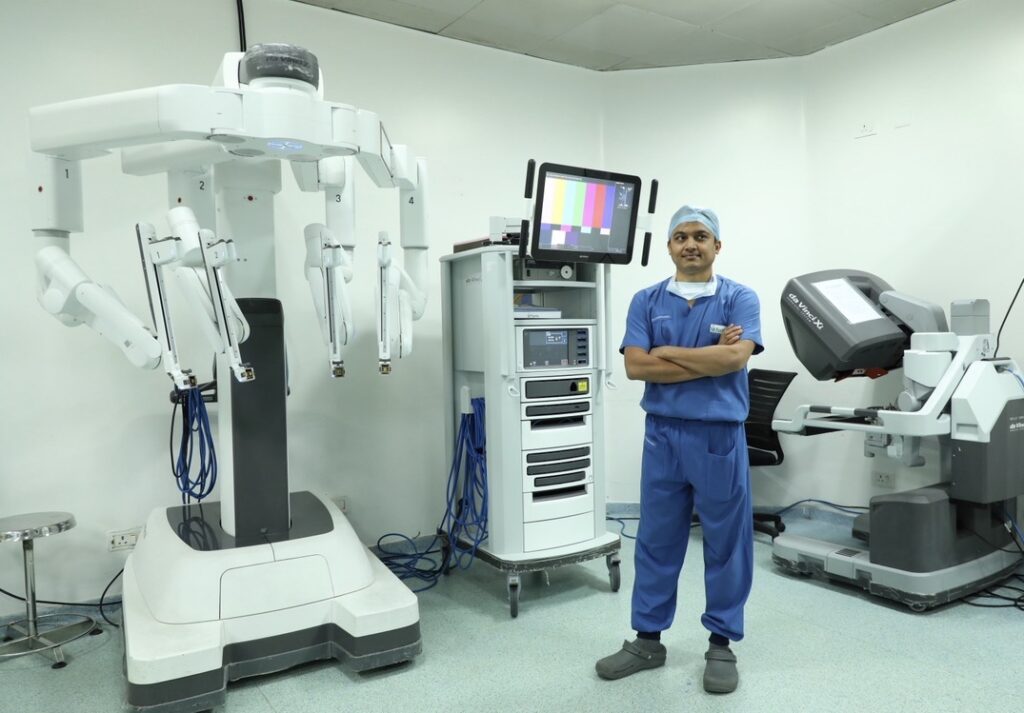
Robotic-assisted surgery is a minimally invasive approach used for selected urological conditions. The surgeon controls the instruments from a console, using a magnified three-dimensional view to perform the operation.
Dr. Sreeharsha Harinatha provides evaluation for robotic urology, urological cancers and kidney transplantation at Apollo Hospitals, Bannerghatta Road and Jayanagar, Bengaluru. The choice of treatment depends on your diagnosis, anatomy, general health and preferences.
Removal of the prostate is a treatment option for selected patients with prostate cancer. When cancer features and anatomy allow, nerve-sparing techniques may be considered. Urinary control and erectile-function recovery vary; the expected benefits and risks are discussed before surgery.
For suitable kidney tumours, partial nephrectomy removes the tumour while preserving the remaining kidney. Imaging, tumour location and kidney function guide whether kidney-sparing surgery is appropriate.
For selected bladder cancers, treatment may include removal of the bladder with assessment of nearby lymph nodes. A new urinary pathway is created, such as an ileal conduit or, in suitable patients, a neobladder. Each option has different care needs and recovery considerations.
A robotic approach may be considered for selected reconstructive procedures, including pyeloplasty and ureteric reconstruction. Evaluation identifies the cause of obstruction or damage and the most appropriate repair.
Robotic-assisted kidney transplantation is considered after assessment by the transplant team. Donor and recipient evaluation, surgical suitability and postoperative monitoring are central to planning.
For some procedures, a robotic approach may reduce blood loss, incision size or hospital stay compared with open surgery. The benefits depend on the operation and the patient. Robotic surgery does not guarantee cancer clearance, freedom from complications or a particular recovery time.
Bring previous scan images, reports, biopsy results where relevant, blood tests and a list of medicines to your consultation. Dr. Sreeharsha will explain suitable surgical and non-surgical options, expected recovery, procedure-specific risks and follow-up.
Hospital stay, catheter use and return to work differ substantially between procedures. Your care team will provide individual instructions on wound care, activity, medicines and review visits.
At a glance
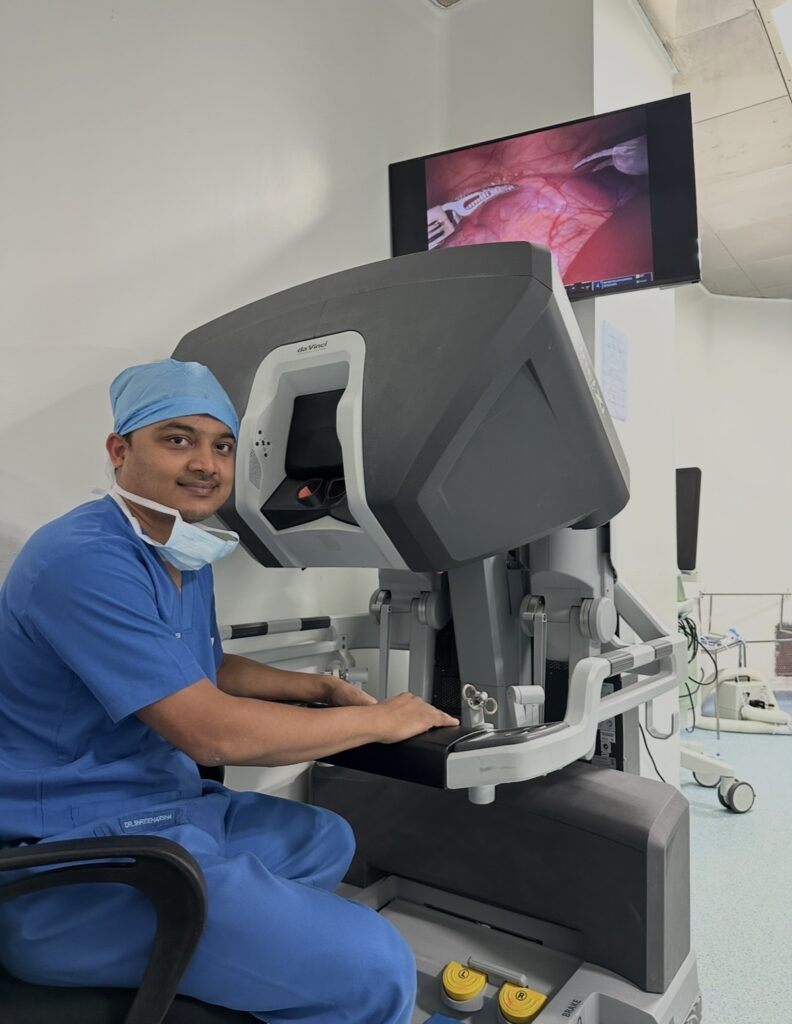
Robotic urology uses the da Vinci surgical system to perform precise keyhole operations such as radical prostatectomy, partial nephrectomy, radical cystectomy, pyeloplasty and kidney transplantation. Benefits include less blood loss, less pain and faster recovery. Dr Sreeharsha Harinatha holds a diploma in robotic surgery from France and is a proctor for Intuitive Surgical.
No. The surgeon controls the instruments throughout the operation; the robotic system assists with visualisation and instrument movement.
Previous surgery does not automatically rule out a robotic approach. Scar tissue, anatomy, scan findings and your overall health need to be assessed individually.
This depends on the procedure and your recovery. Bladder removal and transplantation have different care requirements from prostate or kidney surgery. Your team will discuss the likely stay before treatment.
A catheter is commonly needed after prostate and bladder surgery, and may be used for other procedures. The type and duration are decided according to your operation and healing.
Coverage depends on your policy, procedure and insurer authorisation. The Apollo hospital insurance team can help check coverage and explain expected costs before admission.
Both are minimally invasive. The robot adds magnified 3D vision and wristed instruments, which help in complex steps such as nerve sparing during prostatectomy or suturing during partial nephrectomy. Outcomes depend strongly on the surgeon's experience.
Most patients stay 2–3 days and go home with a urinary catheter for about 7–10 days. Light activities can resume within about 2 weeks, and urinary control improves progressively over the following weeks to months.
Many health insurance policies now cover robotic surgery, sometimes with sub-limits. Check your policy wording and ask the hospital insurance desk for a pre-authorisation estimate before surgery.